 MS Metal Supplies Sdn Bhd
MS Metal Supplies Sdn Bhd
MS Metal Supplies Sdn Bhd
The transformation of large steel coils into usable sizes depends heavily on two essential coil-processing operations: slitting and shearing. These processes form the backbone of every coil center, ensuring that steel is resized, trimmed, and prepared according to precise customer specifications. While both involve cutting steel, their engineering, machinery, and end results differ greatly.
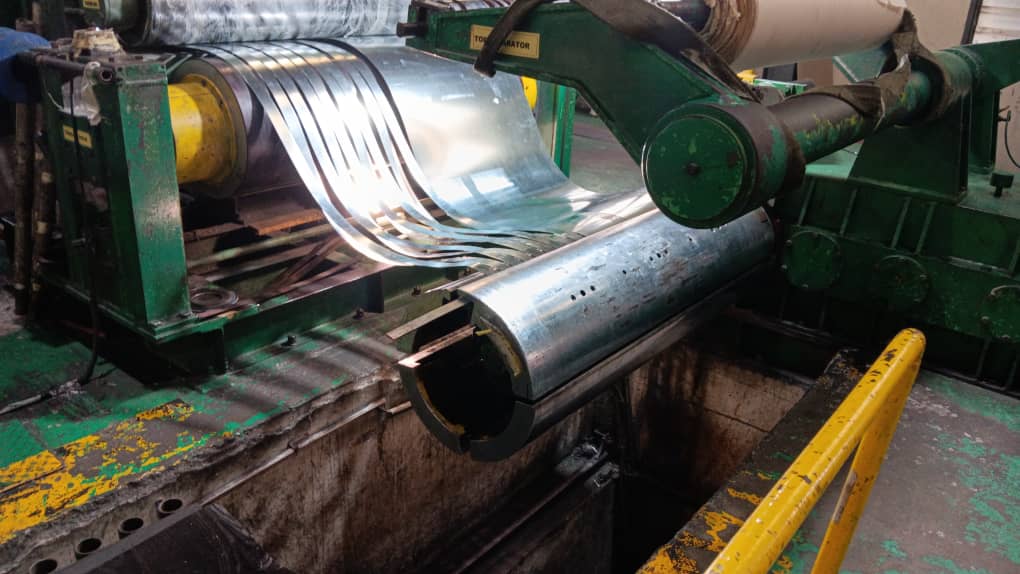
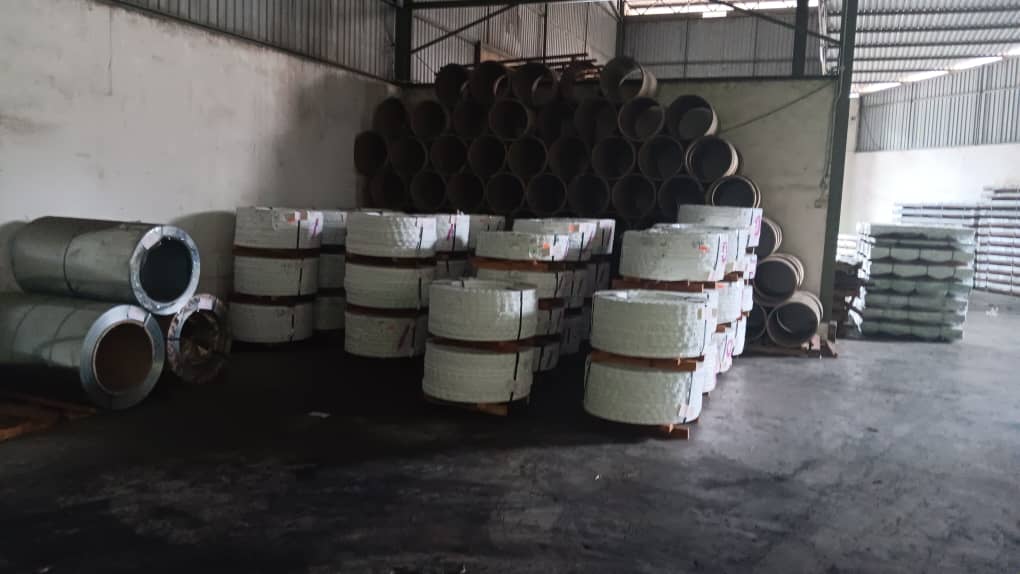
Slitting is a continuous cutting operation where a wide coil is fed through sets of circular, rotating knives. These knives cut the coil into narrower strips known as slit coils. The width of each slit is determined by the positioning of the knives, allowing manufacturers to match the material exactly with their production requirements.
Each strip is rewound into a smaller coil at the end of the line. Proper alignment and tension control are critical: poor settings can cause burrs, camber, scratches, or uneven edges. Modern slitting lines include precision tension units to keep the strip flat and stable during cutting.
Slit coils are widely used in ducting systems, roofing accessories, cable trays, roll-formed channels, steel purlins, pipes, and automotive components.

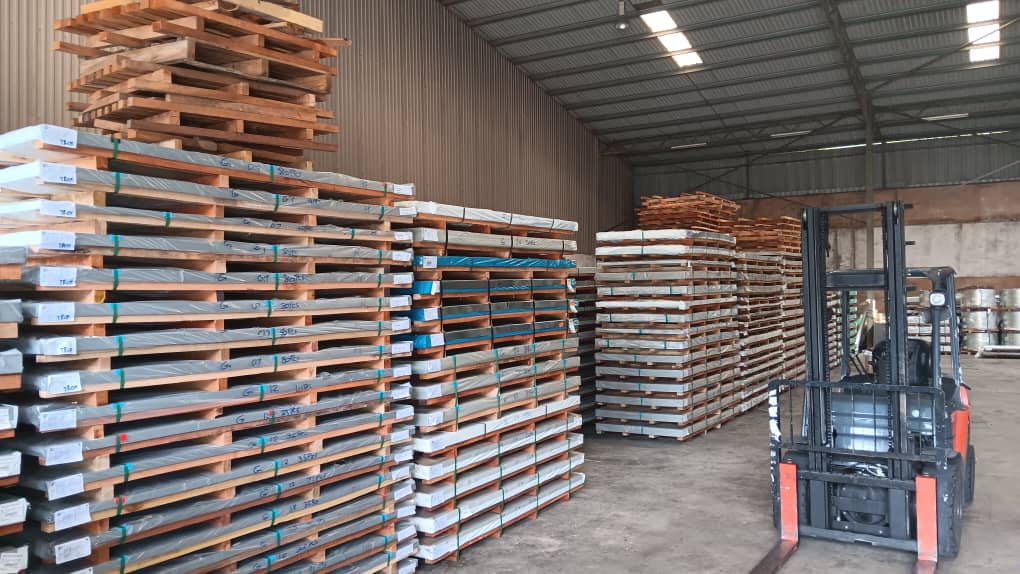
Shearing focuses on cutting steel to specific lengths or trimming it into sheets. Instead of circular knives, it uses a straight-blade guillotine system that provides a clean, straight cut. Before shearing, coils are uncoiled and levelled to remove waviness or coil memory.
Shearing produces flat sheets suitable for fabrication, bending, welding, and precision cutting. Length accuracy and flatness are the main priorities. When properly done, the resulting sheets are consistent in shape and ideal for a wide range of applications.
Sheared sheets are commonly used for HVAC systems, enclosures, cladding, panels, laser-cut parts, kitchen equipment and fabrication workshops.
Although both processes involve cutting steel, they serve completely different purposes. Slitting reshapes a coil by dividing it into narrower coils for continuous production lines such as roll-forming and pipe-making. Shearing produces separate sheets used for fabrication and precision cutting.
Industries such as roofing, ducting, and electrical fabrication often use both forms: slit coils feed roll-formers, while sheared sheets become panels or stamped components. This flexibility highlights the importance of coil centers in the steel supply chain.
Both processes require strict attention to edge quality, flatness, and tension control. Issues such as burrs, edge wave, telescoping, or inaccurate lengths often stem from poor setup or worn blades. High-quality slitting and shearing lines ensure that products meet international standards like JIS, ASTM, EN, and MS.
Klang Valley | Delivery Available | Self-Collect Options
WhatsApp UsAll images, diagrams, and examples used on this page are for illustrative and reference purposes only. Copyright belongs to their respective owners. If any materials need to be credited or removed, please contact us.